WHY PILATES KEEPS ESCAPING THE TREND CATEGORY
And why science is helping us understand its depth more clearly…
Most people who have spent time in the fitness world know the feeling.
A method suddenly seems to be everywhere. One year it is spinning. Then Zumba. Then CrossFit. Then barre. Then bootcamps. Then hot yoga. Then functional training. Then padel. Then some new hybrid class with flashing lights, louder playlists, and a name designed to sound like a challenge.
The formula is familiar. The classes fill up quickly, the images are strong, the promise is easy to understand, and for a while it feels as though this is the thing everyone should be doing.
There is usually a reason these waves catch on.
They create an immediate experience. You leave sweaty, tired, energised, proud of yourself, and often part of something. They are easy to describe, easy to market, and they fit perfectly into modern attention spans because the reward is obvious and immediate.
You feel that you have done something.
But if most of us are honest, we also know another feeling.
The moment when the novelty begins to wear off. The point at which the body starts asking more sophisticated questions than the class can answer. Why does this movement always go into my neck? Why do my hips keep gripping? Why do I leave feeling powerful but not necessarily well? Why am I getting better at surviving the workout, but not always better at understanding my body?
That is often where trends begin to thin out.
Not because they are useless, but because many are built around a format more than a system. They are excellent at creating an experience. They are not always designed to support a person through years of adaptation, injury history, structural differences, aging, pain, rehabilitation, or the endless variability of human bodies.
And this is where Pilates begins to stand apart.
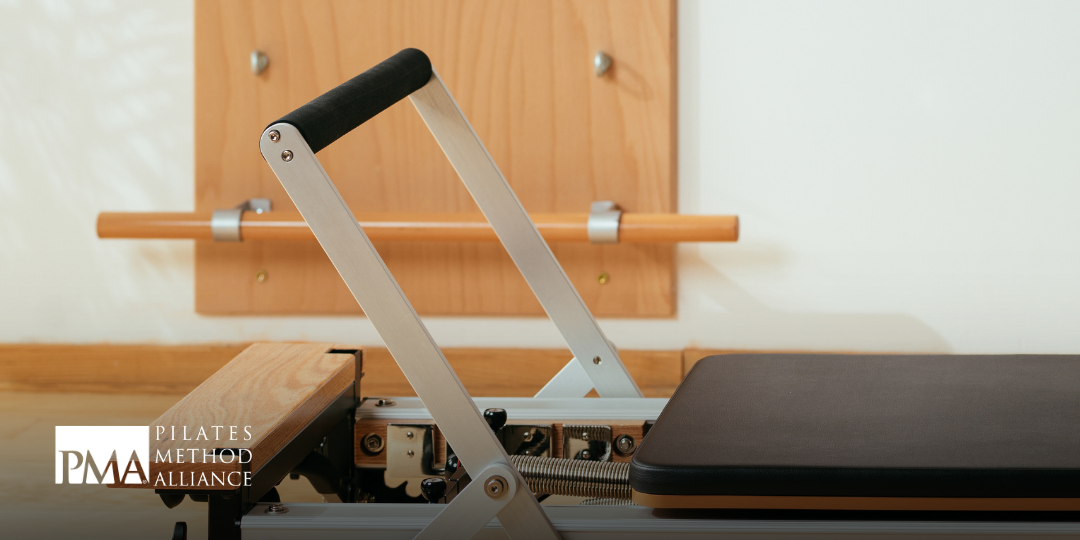
Pilates can absolutely be marketed like a trend. We are all watching that happen. The images are clean, the machines are photogenic, the classes look aspirational, and reformers in neat rows are easy to sell. A moving carriage, springs, straps, a beautiful studio, strong bodies, elegant shapes.
From the outside, Pilates can look like the perfect wellness product for this moment. But the method itself does not sit comfortably inside that level of simplification for very long.
Because Pilates, in the way it was designed, is not just a workout format. It is a movement system. And systems behave differently from trends.
A trend needs to be easily repeatable. Pilates keeps asking to be adjusted.
A trend works best when the same experience can be delivered to large numbers of people in a standardised way. Pilates keeps exposing that different bodies need different things, different timings, different cues, different progressions, and sometimes completely different exercises.
A trend often thrives on intensity, speed, atmosphere, and emotional charge. Pilates keeps bringing people back to things that are less flashy but far more revealing. Where is the effort actually coming from?
What are you gripping that you do not need? Can you create support without stiffness? Can you breathe without losing control? Can you stay organised when the movement becomes demanding?
These are not trendy questions. They are deeper questions. And once a person starts asking them seriously, the relationship with movement changes. This is why so many people come to Pilates for one reason and stay for another.
They may arrive wanting stronger abs, a more toned body, or a class that feels current. But many stay because they encounter something unexpected. A method that reflects them back to themselves with surprising honesty. A practice that shows them not just how strong they are, but how they compensate, where they rush, where they brace, where they collapse, where they disconnect, and where they begin to find support.
That is not the usual logic of a fitness trend. And it is also why Pilates keeps resurfacing across generations without ever being exhausted by popularity. People may try to flatten it into a format, but the method itself keeps resisting that flattening. Its depth keeps showing through.
What is especially interesting now is that science is helping make this easier to explain.
For many years, experienced teachers could see the effects of precise, intelligent movement without always having the language to describe it. Today, biomechanics helps us better understand load distribution and joint organisation. Motor control research explains why repetition alone is not enough, and why quality of input matters. Pain science has made the conversation around tension, compensation, and protection far more nuanced.
Research on breath, pressure management, proprioception, and nervous system regulation is also making one thing increasingly clear.
Efficient movement is not simply about doing more. It is about organising better. And that sits very comfortably inside Pilates. Not because science is rescuing the method, but because it is helping validate why the method has always required more than choreography. More than shape making. More than moving springs around. More than surviving a hard class with good posture and a nice outfit.
Science is helping us see that precision is not a luxury. Progression is not outdated. Individual adaptation is not a complication. These are part of what makes movement effective, sustainable, and intelligent.
This is also why the Pilates world itself keeps evolving.
Many studios that begin with a simplified reformer model eventually start craving more depth. More equipment. More teacher training. More anatomical understanding. More nuance. More specificity.
The method keeps pulling serious practitioners back toward complexity, because complexity is where its real value lives. And perhaps that is the clearest sign that Pilates is not easily reduced to a trend.
Anything can become fashionable for a while. Anything can be packaged beautifully. Anything can be made popular. But not everything keeps asking more of us once the novelty is gone.
Pilates does. That is why it has lasted. That is why it keeps returning. And that is why, even in an age obsessed with quick formats and fast consumption, it continues to offer something rarer.
Not just a class to complete, but a body to understand.