Evolutionary Biology of the Skeleton
Your form is the shape and structure of your body as distinct from its material. It is the architecture of your body and the geometry of your shape. This collection of shapes, traits or characteristics of an organism can be inherited or developed over the organisms lifetime.
Function is the way something works. It is physiological action and can be thought of as the product of form. For example, the worm has a cylindrical shape that lengthens and shortens along its length allowing it to tunnel through the soil. A snake, with a similar outward appearance but different form because it possesses a spine, moves side to side as the spine acts as a pivot point for contraction. Thus, the function of the body or the way the body moves is dependent on the form or the shape and structure of that body.
However, form is not always a constant. The daily structure or alignment of a human body is constantly changing. There is not a static definition of alignment and there are many different positions to find alignment. Further, your posture is constantly in flux responding to your physical and psychological state. In fact, it is in flux moment to moment as you stand and move over a set of movable muscles and joints (postural sway).
Daily changes can accumulate to postural habits that become more visible and affect more of your body with age. The habits of the body- unconscious ways of holding and positioning yourself – are just that, habits, and finding the most efficient habits can help you decide if yours are serving the purpose of healthy movement.
When you have developed a set of postural habits that have changed the form of your body, the function of your body will respond accordingly. For example, if you have been working over a keyboard with your shoulders hunched and chin sliding forward, everyday maintaining this habit, your body will begin to respond to this postural habit by reinforcing the muscles and other supporting tissue at the upper back or thoracic spine and neck. The form of your body will change as this habit becomes consistent over a long period of time. When the structure or form changes, the function will change as well. In this case, the spine will no longer be effectively internally stabilized, the torso will lose muscular strength and mobility and very often pain will result.
What is the purpose of a skeleton? Why do we have one?
The bones in our bodies do not rest up on each other. They float within and are supported by the non rigid parts of our bodies. So how do they work?
The rigid parts of our bodies provide a means for two opposing forces to act against each other, (for example, the biceps contract and the triceps are lengthened as the elbow bends and the triceps contract to lengthen the biceps and straighten our elbow.) The skeleton also acts to protect the soft and delicate parts of the body.
Further, the skeleton and other structures of the body, like fascia, provide a means of force transmission, dispersion, or amelioration throughout the body. The force exerted in one area can be transmitted and amplified through the skeleton and fascia to another area in the body. (For example, using the twisting force from the shoulder muscles, amplified down the length of the arm to twist the lid off of a jar.) Additionally, the force experienced in one area can be distributed and dispersed through the body to protect structures from strain. For example, as we walk or run, the impact force of our foot on the ground can, over time, cause damage. However, because of the structure or form of our foot (the calcaneal bone and the Achilles tendon acting to distribute landing force and the big tow, arches, and Plantar fascia transforming the flexible, shock absorbing dorsally flexed foot into a shorter rigid plantar flexed foot to push load through and transfer force back in to the ground) we can walk with little worry of damage.
But the term skeleton can be used to describe anything that provides a way for muscles to oppose one another and force to be transmitted. Fluids under pressure can also act as a means to allow muscles to act against each other and forces to be transmitted through internal pressure. Animals have been using this physical property to move through their environment for billions of years.
In fact, there are many examples throughout the animal kingdom where a fluid and pressure based skeletal system is used. This type of structure is termed a hydrostatic skeleton and is found in sea anemones, worms, snails, spider legs, insects under their shell, and even us!
The hydrostatic skeleton within us helps us stabilize our spine and pelvis. The muscles of the core: the diaphragm, deep abdominals, pelvic floor and muscles of the spine, contract to create a fluid filled cavity under pressure.

Picture a simplified ‘human core’ as a six sided box made of muscles; the front of the box is the transversus abdominus, the sides are the obliques, the back of the box is the multifidus and erector spinae, the top of the box is the diaphragm and the bottom of the box is the pelvic floor. Now, imagine this box is filled with a water balloon. If all six sides of the box contract equally, the box becomes rigid, capable of force transmission and when relaxed the box has mobility in all directions.
The forces within this cavity act together to provide a means to transmit work as energy through the core, protect the spine from excess load during force transfer (like picking up a heavy object), and allow for mobility providing functionality.
Within the body there is also a soft skeleton system called fascia.
But really, what is fascia?
Fascia is basically a spiderweb network of fibers and cells within a syrup-like fluid. These fibers wrap around each and every muscle in the body connecting muscles and movements together. They also form a continuous layer under the skin like a body sock and extend deep within the muscles themselves.
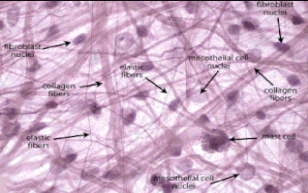
“Fascia is a sheath, a sheet, or any number of other dissectible aggregations of connective tissue that formed beneath the skin to attach, and clothe, and separate muscles and other internal organs.” (September 18th 2015 at the 4th International Fascia Research Congress)
Why is fascia important?
These fibers have many jobs in the body. First, they have the ability to transport nutrients and, due to their hydrophilic nature, water throughout the body, even bringing water to dehydrated cells deep within the muscles. Second, they provide a structural framework for the muscles to build and work against, similar to a scaffold on a building. Third, the fascia can transmit force through this fibrous network. For example, when you jump and land on your feet the force of your landing is transmitted from the soles of the feet through the fascia to the rest of your body allowing it to dissipate. Lastly, fascia has the ability to respond to mechanical and nervous inputs from the outside world. It can build more strength or flexibility into the network. In other words, the environment and our movement through it can affect the structure of our fascia and its ability to function.
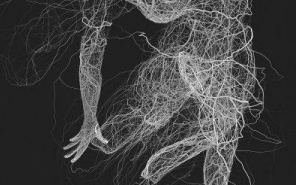
“Fascia is the tensional, continuous fibrillar network within the body, extending from the surface of the skin to the nucleus of the cell. This Global Network [or soft skeleton] is mobile, adaptable, fractal and irregular; it constitutes the basic structural architecture of the human body.” (Guimberteau and Armstrong, 2015)
How does fascia relate to movement?
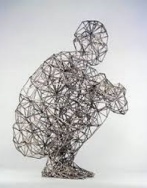
The body is not a solid structure. We have solid parts, like bones, strung and held together with wires, like fascia, that can be put under compression (through muscle contraction). Tensegrity refers to the concept that structural integrity can be formed from continuous tension and discontinuous compression members in an object. R. Buckminster Fuller, an American architect who popularized compression/tension structures like the geodesic dome, applied this concept of tensegrity to many types of structures and it can also be applied to how we think about our bodies.
It was previously believed that the body was a compression structure with the bones stacked upon one another. Now, we view the body as a tensegrity structure with fascia and muscle as the tension members and the bones as the discontinuous compression members. This distributes forces and allows for a lighter, more mobile structure. The soft tissues are always under tension and the bones are always under slight compression. The body contains tensegrity structures even down to the cellular level. Cells have a cytoskeleton system which is based on compression and tension and the push and pull of this tensegrity cellular system can even impact genetic expression.
Tensegrity structures all have a baseline level of tension within the network. This is the base level of tension that allows a system to retain or return to its shape or integrity. When we need to do work, or movement, we add to the level of tension and the system globally adjusts the amount of tension and compression within. (We can tension our body by reaching an arm out to the side. This also adds compression perpendicular to the tensioning line, down the opposite lateral line from the arm.
We also add compression when we lift heavy objects drawing everything towards the center to create a more compressed structure.) When the movement is over, the body should return to the baseline level of tension. This quality of returning to baseline exists within this elastic, energy-efficient system and works by using fascia to distribute loads globally and often allows us to maintain our form without strain or damage. However, this doesn't always occur due to injury, repetitive strain, and many end up with residual areas of tension resulting in adaptive shortening or development of dysfunctional fascial density over time. This impedes movement, creates limited fluid flow, and possibly adhesion in the tissues resulting in pain.
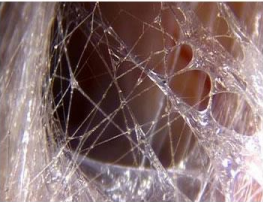
As we learned above, fascia has the physical appearance of a wet, viscus, spider webby, fibrous network. It looks like a fishnet stocking with a crimp like a pleated skirt and is slimy and silky when healthy. It is the crimp that allows the fascia to stabilize in a two way stretch (important to Pilates) and gives fascia an elastic quality. In unhealthy fascia and scar tissue, the fibers within the fascia can be irregular in appearance and may become so dense that they pull and hold fast to other structures limiting force transmission.
Further, as people age the fascia loses the elastic, crimp-like quality and starts to appear and function as a snarl or a disorganized area. Sedentary lifestyles contribute to this process. Lack of mobility encourages growth of crosslinks connecting this fishnet stocking to itself, which increases stiffness and limits mobility. Movement is necessary to keep fascia healthy.
How does Pilates use the idea of tensegrity to promote both fascial and muscular development?
The system of movement called Pilates utilizes the ideas of tensegrity to assist in stability and the development of awareness and balance in the body. Pilates does this by promoting whole body connectivity, flow, encouraging length and focusing on the space within the movement, practicing dynamic stability, and using the apparatus to aid in awareness of tensile movement.
Each of these priorities in Pilates connect to the core principles of centering, concentration, control, precision, breath, and flow.
Pilates requires whole body connectivity. Instead of isolating a single muscle group or ‘targeting’ the abs or glutes, every exercise in Pilates is done to work the whole, promoting the reality of the body as a single continuous network. The principles of concentration, control and breath allow us to practice the work knowing that each shift in movement is felt throughout the system. Our breath also helps to maintain this whole body network connectivity.
Flow within each exercise and from one to another promotes elastic recoil. When we practice Pilates with an emphasis on flow we utilize the rebound quality of our fascia and work with and strengthen our bio tensegrity. As we continuously move through exercises in Pilates, varying movements send forces from the center to the limbs, absorbing the energy from the movement, springing back and distributing the tension globally. Thus, the body can practice and strengthen the fascial system that supports changing shape and distributing forces efficiently.
As teachers we often focus on length or creating space in the spine and promoting dynamic stability. This emphasis on a two way stretch creates an obvious tension between two points and challenges our ability to maintain balance and stability while in motion or responding to external forces. These are incredibly important concepts as they relate to our physiological ability to create stability without clenching or static bracing. Similar to the children’s toy called a
Finger Trap, when the body is pulled in opposing directions the middle becomes narrower and is under tension. The toy pulls on the fingers “trapping” them within the toy and one can feel the resistance and strength in the toy’s ‘network’. This occurs in the body as well, where the muscles and fascia lengthen and stretch creating axial tension parallel to the lengthening two-way stretch. This axial tension is converted to a tightening radial compressive force around the middle. In the case of the core, this radial compression originating from the axial tension of lengthening the spine, is used to stabilize the core as we move. The principles of centering, precision, breath, and control refer to the dynamic stability found in the two-way stretch.
Finally, Pilates uses a collection of apparatus to support and challenge movement. All the apparatus use springs in controlled tension that allow the body to feel the compression and tension feedback throughout the fascial system. In working to lengthen a spring, your body feels an ever growing sense of resistance as the tension of the spring increases. In resisting the recoil of the spring upon its return your body becomes aware of the compression not only within the spring but also within its own tensile system. Countering this compression is part of the work in Pilates and an awareness or concentration on these sensations allows us to connect, work with, and strengthen the relationship between muscles, fascia and bones.
As Pilates teachers we work within a historical framework. The body’s history or habits of movement have shaped the form and guide how we progress with our clients towards strength, awareness and joy in movement. An awareness of the contributions of the skeleton, both fascial and bone, in how movement is achieved and supported can aid us in prioritizing specific exercises, allow us to shape our cues towards a certain aim whether it is length, flow etc. and provide the opportunity for our clients to work within the intimate relationship between form and function.